Emotion:
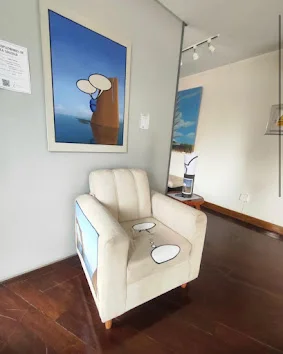
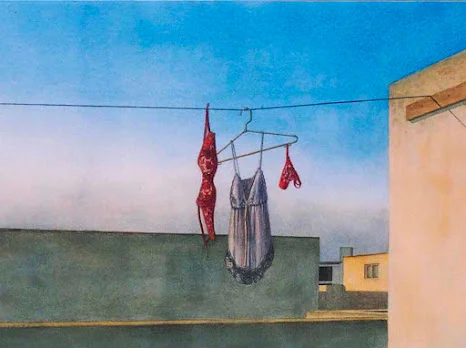
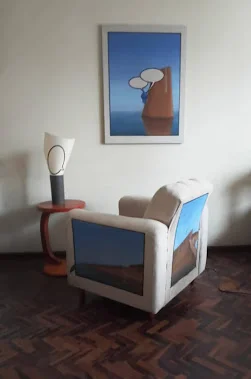
His works invite a reflective pause. There is an atmosphere of contemplation, as if each stroke were a meditation on time, memory, or identity. Garay, a printmaker and graduate of the PUPC (Pontifical Catholic University of Peru), works with techniques such as woodcut, embossing, and intaglio, which create surfaces rich in texture. These appeal not only to the visual but also to the tactile, evoking emotions linked to the body and contact. In his exhibition "Works on Paper," the use of paper as the primary medium reinforces fragility, intimacy, and emotional honesty. Paper becomes a space for intimacy, almost like a visual letter. His exhibition "Works on Paper" at Monumental Callao reinforces his commitment to the medium as an emotional and conceptual language. Garay doesn't limit himself to a single style, but rather constructs his own language from the graphic, the urban, and the symbolic.
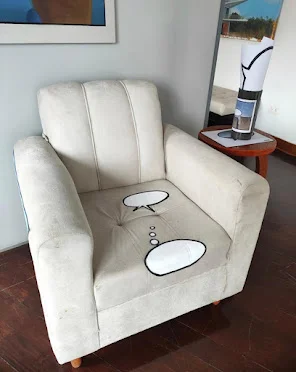
In the vase, there is a print that was exhibited at the 2016 Osten Biennial of Drawing, held in Skopje, North Macedonia. The print is listed in the catalog on page 187. This print is a mixed-media technique, actually two techniques: woodcut (the black part) and embossing (the raised part).